Whispers in the Nest
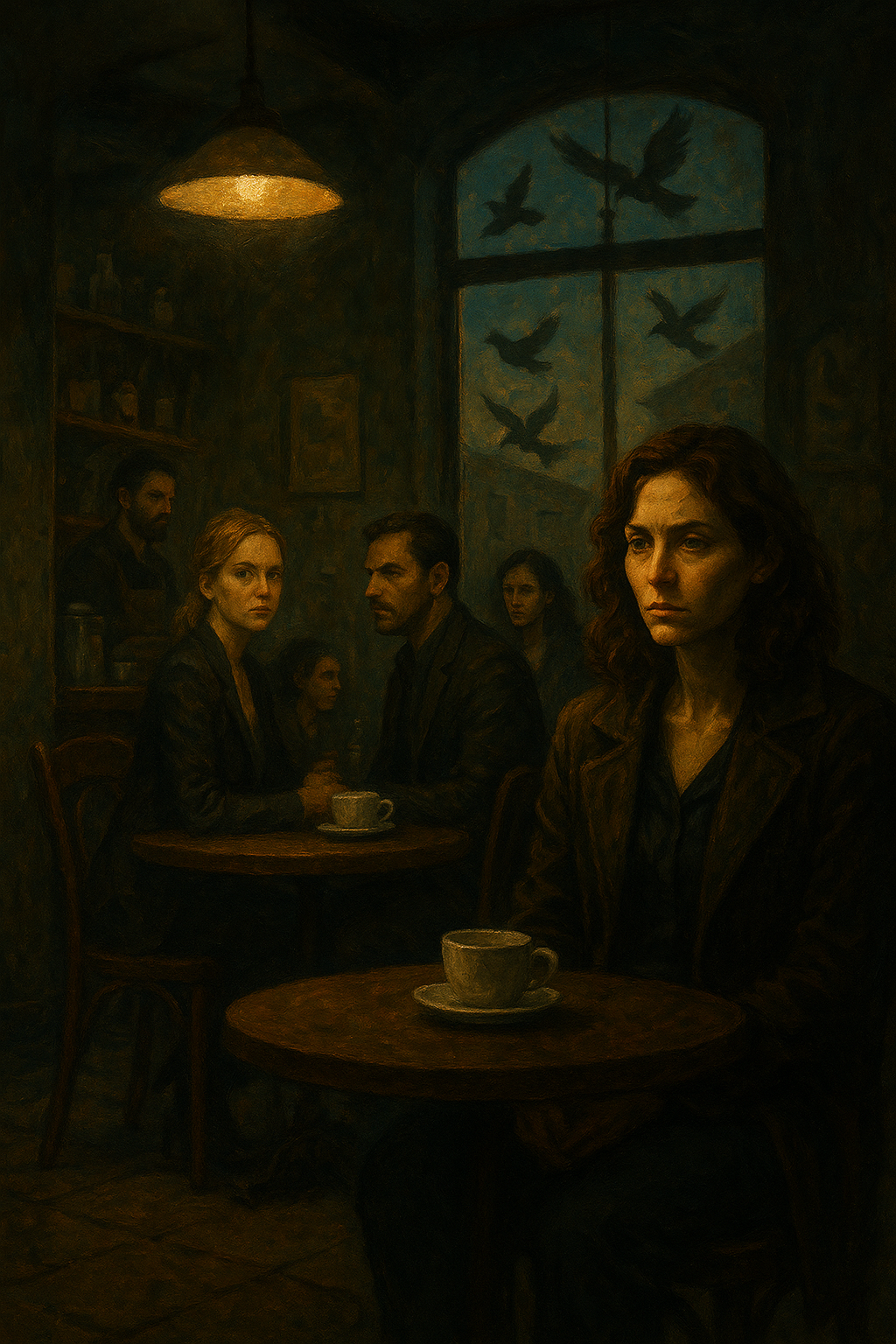
The coffee had gone cold an hour ago. Mara held the cup anyway, the ceramic ring dark against the wood grain of the table. Not because she needed it. Habit. The kind of habit that came from years of meetings in spaces that weren't quite safe. The Pigeon Nest occupied the ground floor of a converted warehouse, all exposed brick and salvaged windows that rattled when the wind moved through the district. The tables were mismatched, inherited from somewhere else, and the owner—a woman named Rita who asked no questions—kept the lights dim enough that you could exist here without being seen. Mara had learned not to stare. Instead, she existed in the margins of her own attention, the way you listen to a conversation in the next room without turning your head.
Three men sat near the window. They'd been there since seven, when the light had started to fail outside. She knew their order without watching: whiskey for the tall one, coffee black for the older man with the scarred hand, beer for the third. They were careful with their voices. Not secretive exactly. Just practiced. The tall one leaned forward. "Structure's compromised." The older man didn't move. His coffee sat untouched on the table. "How much?" "Enough. Someone's asking the wrong questions." The wind moved through the café then—a draft from the back door, or the windows settling. The older man's hand tightened on his cup. He had scars across his knuckles, the kind you got from a long time doing something specific. His voice was measured, each word separated by a small silence. "That's what I'm trying to figure out."
Mara's coffee was definitely cold now. She could feel that. The temperature of it against her palm, inert and wrong. She didn't set it down. Movement would break the thing that was happening, the thin membrane between listening and being noticed. The tall one glanced toward the window. Outside, pigeons had gathered on the fire escape, their bodies tensed as if braced for flight. One of them shifted its weight, and the metal groaned. The man watching them seemed to be waiting for something. Or waiting for something to be over. The distinction was probably not meaningful. "There's a name," the tall one said. The older man's jaw moved slightly. He was chewing the inside of his cheek, a tell so small it would have meant nothing to anyone who didn't know what to look for. Mara knew what to look for. "What name?" the third man asked.
The tall one didn't answer immediately. He reached for his glass, and the ice shifted inside it. The sound was small and precise. It cut through the café's ambient hum—the hiss of the espresso machine, Rita moving behind the counter, the low murmur of other conversations that weren't this one. "Mara," he said finally. The coffee cup remained in her hand. Her fingers didn't loosen. Around her, the café continued as if nothing had changed. A couple laughed at a table near the bar. Someone's phone buzzed. Rita was wiping down the espresso nozzle with a cloth. The world had not shifted. The world had simply revealed itself to have already shifted, and Mara was only now catching up to the fact.
The tall one was still watching the window. The pigeons had begun to move, their wings catching the streetlight from outside. One of them fluttered against the glass as if testing it, as if checking whether the boundary between inside and outside was still there. She didn't move. Not yet. Not while they were still talking. Not while the older man was leaning back in his chair, his scarred hand finally reaching for his coffee, and the tall one was watching the birds the way a person watches a message they can't quite read. Outside, the pigeon beat its wings against the window again. Its heart sounding like whispers. Like something being said in the space where she wasn't supposed to be listening. Like something being said about her.
{ "prose": "The coffee had gone cold an hour ago. Mara held the cup anyway, the ceramic ring dark against the wood grain of the table. Habit. The kind of habit that came from years of meetings in spaces that weren't quite safe.\n\nThe Pigeon Nest occupied the ground floor of a converted warehouse, all exposed brick and salvaged windows that rattled when the wind moved through the district. The tables were mismatched, inherited from somewhere else, and the owner—a woman named Rita who asked no questions—kept the lights dim enough that you could exist here without being seen. Mara had learned not to stare. Instead, she existed in the margins of her own attention, the way you listen to a conversation in the next room without turning your head.\n\nThree men sat near the window. They'd been there since seven, when the light had started to fail outside.
She knew their order without watching: whiskey for the tall one, coffee black for the older man with the scarred hand, beer for the third. They were careful with their voices. Not secretive exactly. Just practiced.\n\nThe tall one leaned forward. \"Structure's compromised.\"\n\nThe older man didn't move. His coffee sat untouched on the table. \"How much?\"\n\n\"Enough. Someone's asking the wrong questions.\"\n\nThe wind moved through the café then—a draft from the back door, or the windows settling. The older man's hand tightened on his cup. He had scars across his knuckles, the kind you got from a long time doing something specific. His voice was measured, each word separated by a small silence. \"That's what I'm trying to figure out.\"\n\nMara's coffee was definitely cold now. She could feel that. The temperature of it against her palm, inert and wrong. She didn't set it down.
Movement would break the thing that was happening, the thin membrane between listening and being noticed.\n\nThe tall one glanced toward the window. Outside, pigeons had gathered on the fire escape, their bodies tensed as if braced for flight. One of them shifted its weight, and the metal groaned. The man watching them seemed to be waiting for something. Or waiting for something to be over. The distinction was probably not meaningful.\n\n\"There's a name,\" the tall one said.\n\nThe older man's jaw moved slightly. He was chewing the inside of his cheek, a tell so small it would have meant nothing to anyone who didn't know what to look for. Mara knew what to look for.\n\n\"What name?\" the third man asked.\n\nThe tall one didn't answer immediately. He reached for his glass, and the ice shifted inside it. The sound was small and precise.
It pierced the café's ambient hum—the hiss of the espresso machine, Rita moving behind the counter, the low murmur of other conversations that weren't this one.\n\n\"Mara,\" he said finally.\n\nThe coffee cup remained in her hand. Her fingers didn't loosen. Around her, the café continued as if nothing had changed. A couple laughed at a table near the bar. Someone's phone buzzed. Rita was wiping down the espresso nozzle with a cloth. The world had not shifted. The world had simply revealed itself to have already shifted, and Mara was only now catching up to the fact.\n\nThe tall one was still watching the window. The pigeons had begun to move, their wings catching the streetlight from outside. One of them fluttered against the glass as if testing it, as if checking whether the boundary between inside and outside was still there.\n\nShe didn't move. Not yet. Not while they were still talking.
Not while the older man was leaning back in his chair, his scarred hand finally reaching for his coffee, and the tall one was watching the birds the way a person watches a message they can't quite read.\n\nOutside, the pigeon beat its wings against the window again. Its heart sounding like whispers. Like something being said in the space where she wasn't supposed to be listening.\n\nLike something being said about her.", "bible_delta":