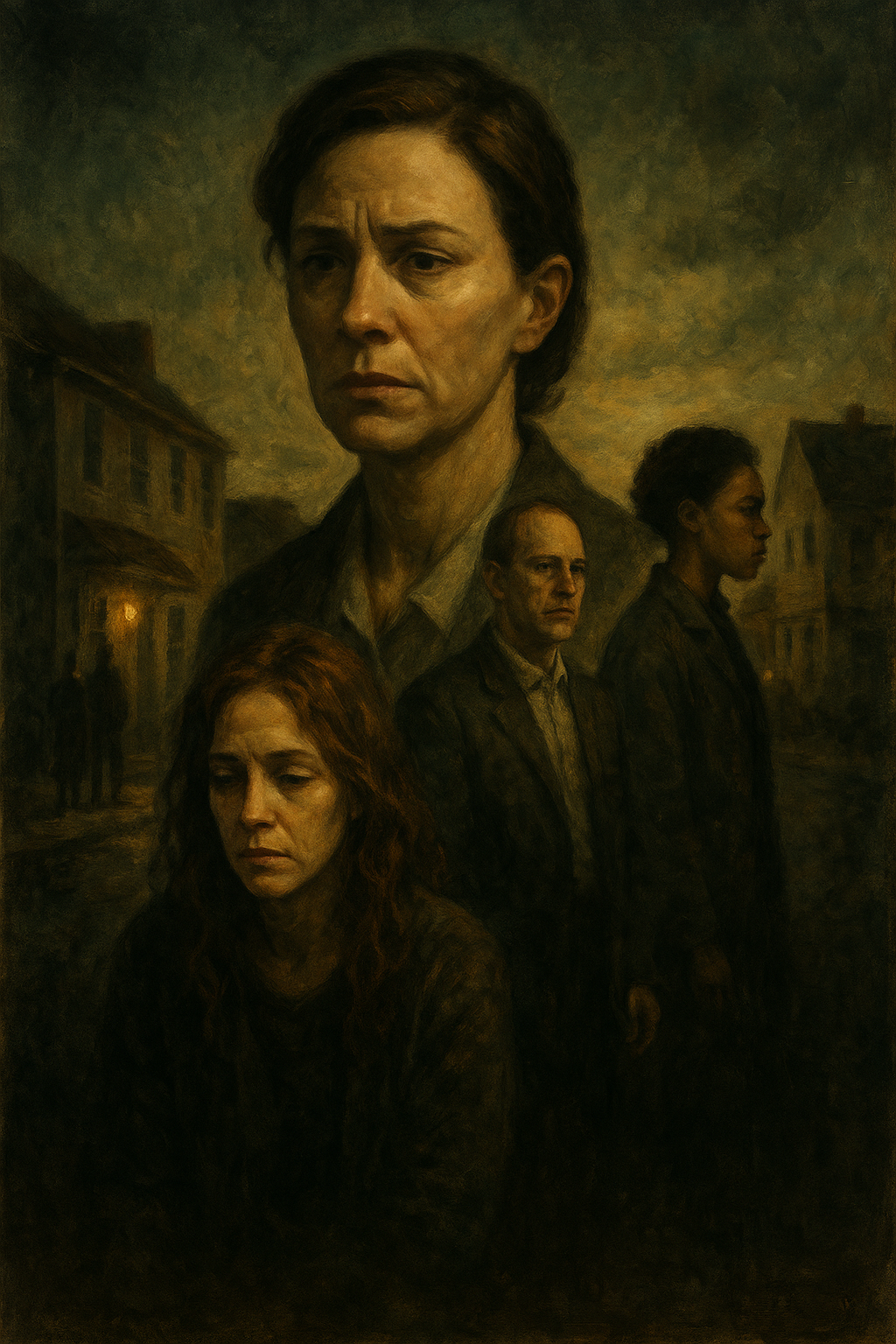
Fragments of Lost Sound
The sharp scent of bleach mingled with the rhythmic ticking of a clock on the wall, marking time in Dr. Evelyn Harper's sterile office. The room was a study in clinical precision, every surface gleaming, every file neatly stacked. A single potted plant, its leaves bright and artificial, stood as the only gesture towards warmth in a space designed to eliminate the lingering scent of humanity. In this world, chaos was a distant memory, and emotions were kept tightly under wraps, an arrangement deemed essential by those in power.
Evelyn, seated at her desk, adjusted her glasses as she opened the case file of a graduate—an individual who had completed the state-sanctioned education but was left with little opportunity for intellectual curiosity or artistic expression. The name at the top of the file sent a ripple of unease through her: Iris. Despite the mundanity of the label, Evelyn felt the weight of irony; society didn’t reward curiosity or creativity. It punished them. For the past few weeks, Iris had been adamant about dredging up her artistic past, insisting that it wasn’t simply an indulgence but a necessity. The urge to reclaim memories deemed dangerous by the Cognitive Dissent Authority gnawed at Evelyn's resolve. She pressed her palm against her chest, feeling the weight of unspoken dreams surfacing like a tide.
What was at stake, she thought, if she failed to convince Iris to accept the limitations of her treatment? The cold steel of the regime's rules tightened around her like a vice, and the implications of her role in maintaining this order clung to her like a shadow. As she skimmed the pages, a photograph slipped from the file and fluttered onto her desk. It depicted an abstract painting, wild and vivid, colors colliding in a way that stirred something deep within her. The flickering shadows of a memory surged, drawing her into a moment she had long since buried.
They had been her colors, once, mixing together in a cacophony of possibility. How long had it been since Evelyn had allowed herself to feel that vibrancy, to compose her own expressions of the world? The thought was unsettling, a reminder of how neatly she had conformed to the expectations wrapped around her profession. She blinked, fighting the flood of recollection. Was this what Iris’s case meant to her? The question clawed at her resolve, dangerously close to exposing the fissures in her carefully constructed facade. The tension twisted tighter as she flipped through Iris's notes, filled with references to forgotten dreams and the desire to create. There was a desperation in Iris’s handwriting that resonated with Evelyn like a long-repressed echo. What could she do to reconcile Iris’s pursuit with her own entrapment? Her thoughts spiraled, a tightrope strung over an ever-deepening chasm.
Just then, a shadow fell across her desk, dimming the sunlight that filtered through the slats of the blinds. Evelyn looked up, her heart stuttering as Auditor Theodore Pell stood at her door. Pell was a man of sharp features and sharper eyes, often focused on the surface rather than the emotions hidden beneath. His presence was an intrusion; the air thickened with unspoken tension. “Dr. Harper,” he said, his voice devoid of warmth. “We wouldn’t want any complications, would we?” His words dripped with warning, making her throat tighten. In that moment, she understood the stakes had shifted. Iris’s case was no longer simply about an artist reclaiming her lost voice; it was a potential threat hanging like a blade over her head.
The intensity of Pell’s gaze pressed down on her, and she felt the weight of the law as she struggled to maintain composure. If she didn’t manage to persuade Iris to abandon this pursuit, she risked losing control not just over her treatment but over herself. She fidgeted with the case file, an attempt to distract herself from the discomfort growing in her chest. The door clicked shut behind Pell, leaving a lingering silence that felt heavy with unspoken tension.
Evelyn sat still, the photo of the wild painting hovering in her peripheral vision, a reminder of a world that once was, now eclipsed by a regime that dictated the terms of her existence. As she gazed at the file, her mind raced through the implications of Pell's visit, a quiet storm brewing within her. The echo of forgotten colors whispered in the edges of her reason, threatening to unravel everything she had worked so hard to maintain.